
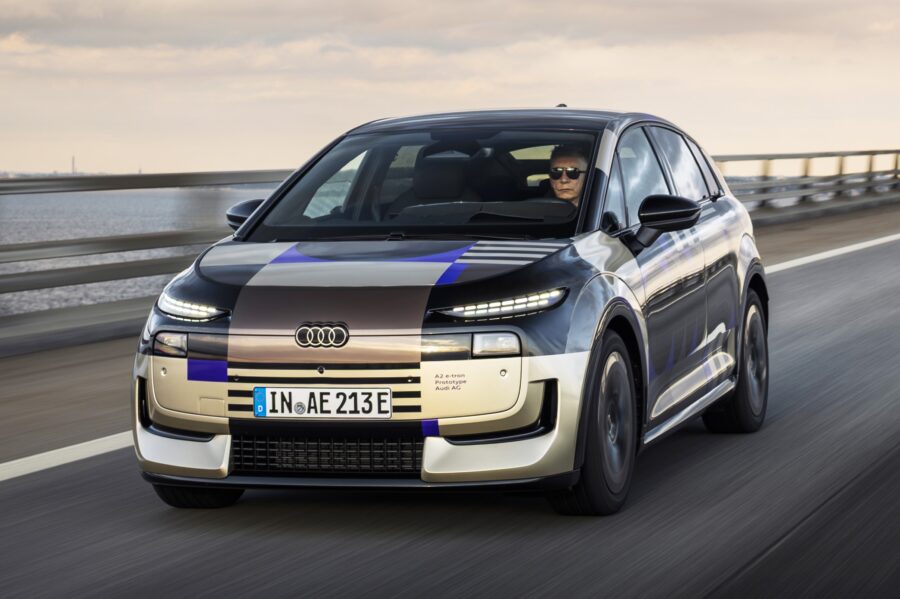
The Audi A2 was never the loudest car in the Audi range. It was small, light and made for people who wanted a practical car with good fuel economy. Now Audi is bringing the A2 name back, but this time with an electric powertrain. The new A2 e-tron has been shown ahead of its global debut later this year.
Audi has worked on several areas of the car to keep its energy use low. The company says the A2 e-tron can record 12.8kWh per 100km with the optional Efficiency Package. That makes it the most efficient Audi production car tested by the company so far.
Audi A2 e-tron: Key Details
| Details | Audi A2 e-tron |
|---|---|
| Motor | Rear mounted electric motor |
| Power | 190hp |
| Battery | 61kWh LFP |
| Usable battery | 58kWh |
| Claimed efficiency | 12.8kWh/100km |
| Estimated range | Around 453km |
| Drag coefficient | 0.24 |
| Drive | Rear wheel drive |
| Charging | AC and DC charging |
| V2L output | Up to 2.3kW |
| V2H | Yes |
| Global debut | Autumn 2026 |
A Small EV With A Big Focus On Efficiency
Audi has not simply used a bigger battery to chase more range. The car uses a smaller 61kWh battery with 58kWh available for use.
The rear mounted electric motor makes 190hp. It uses an APP350 permanent magnet motor and sends power to the rear wheels.
The battery uses LFP cells and a cell to pack design. The cells are placed directly inside the battery pack, which helps Audi make better use of the available space.
Some key battery details include:
- 61kWh total capacity
- 58kWh usable capacity
- LFP battery chemistry
- Cell to pack construction
- Regular charging up to 100 percent
- Improved thermal management
The official WLTP range will be confirmed closer to the launch. Based on the available efficiency figure, the 58kWh usable battery could deliver around 453km in WLTP conditions.
The A2 Name Returns With A Modern Design
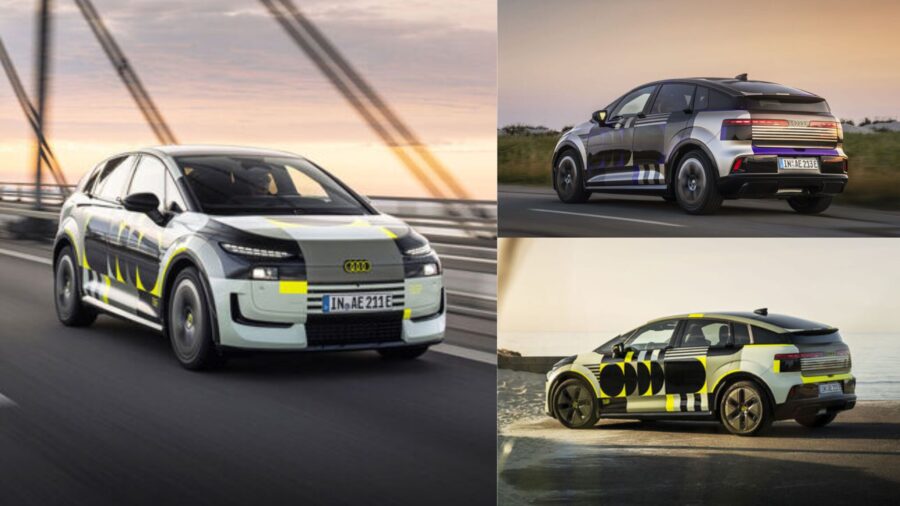
The new electric A2 still carries some visual links to the old model. The overall shape is compact and practical, but Audi has given it a much more modern look. The latest prototype images show:
- Split LED headlamps
- L shaped front air vents
- Wide wheel arches
- Aero designed wheels
- Rectangular LED tail lamps
- Upright rear section
- Smooth body surfaces
The design also helps the car’s aerodynamic performance.
Aerodynamics Play A Major Role
Look closely at the A2 e-tron and the shape tells part of the story. Audi has worked hard to make the body move through the air with less resistance.
The car has a drag coefficient of 0.24. This is the lowest figure among Audi’s compact models.
There are several small changes that help achieve this:
- Fully covered underbody
- Air curtains at the front
- Smaller gaps around the wheel arches
- Aero focused alloy wheels
- Smooth front section
- Flowing roofline
- Active front cooling flap
The cooling flap normally stays closed. It opens when the car needs more cooling during fast charging, strong acceleration or hot weather.
Audi says the Efficiency Package can cut energy use by up to 0.9kWh per 100km compared with the same car without the package.
Motor Also Gets Efficiency Updates
The electric motor is not the only part that has been worked on. Audi says the complete electric drive system is around 10 percent more efficient than its earlier setup.
The power electronics use silicon carbide semiconductors. These help reduce energy losses. The motor also gets thinner steel laminations and revised windings. Audi has also used lower friction oil in the gearbox. A taller 10.2:1 gear ratio helps the car use less energy during highway driving.
These changes may not sound very exciting on paper, but they matter when the aim is to get more kilometres from every unit of electricity.
V2L And V2H Add More Uses
The A2 e-tron will not only be able to store electricity for driving.
It will also support Vehicle to Load technology. This can supply up to 2.3kW to external electrical devices. That means the car battery can be used to power suitable appliances.
Audi will also offer Vehicle to Home technology. With compatible charging equipment, the battery can work as an energy source for a home.
V2H will initially be offered in Germany, Austria and Switzerland.
Charging And Battery Improvements
Audi has also worked on reducing charging losses. Its updated thermal management system helps improve wallbox charging efficiency to 89.6 percent.
The LFP battery is another useful part of the package. Audi says the battery can be charged to 100 percent regularly without the same long term concerns linked with some other battery chemistries.
This could make the car easier to use for owners who want a simple daily charging routine.
What Happens Next?
The Audi A2 e-tron is expected to make its full global debut in autumn 2026. European sales are expected towards the end of 2026 or in early 2027.
Audi has confirmed the 190hp version for now. More versions could be added later.
The A2 e-tron is a small electric Audi, but there is quite a lot happening under its simple shape. The car combines a 61kWh LFP battery, a 190hp motor, smart aerodynamics and new charging technology.
For now, the most interesting number is the 12.8kWh/100km efficiency figure. If the production car stays close to this figure, the new A2 could be a very interesting option for people who want an electric hatchback that does not need a huge battery to deliver useful range.