
India has made a a quiet but meaningful step towards the future of flying taxis.
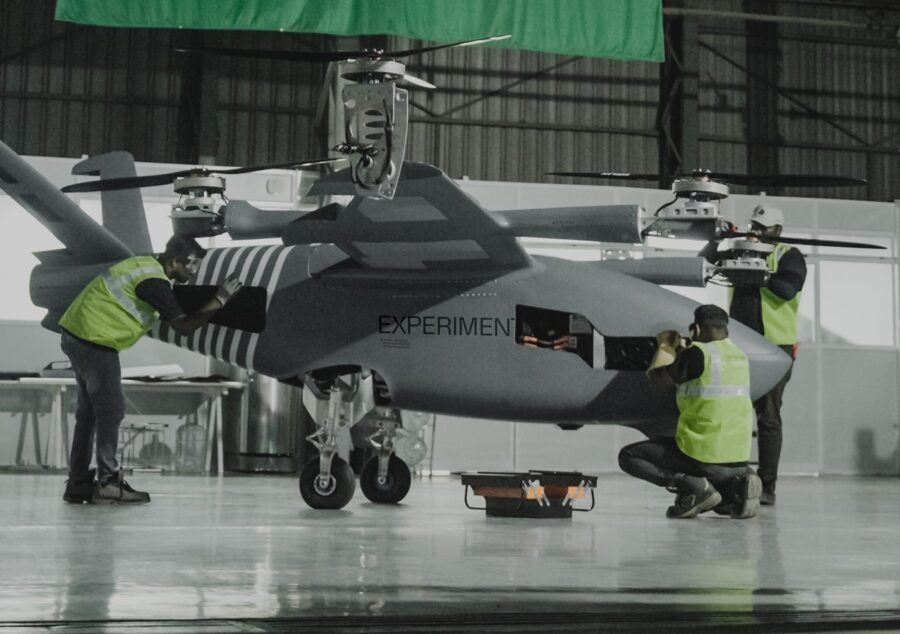
Bengaluru-based startup Sarla Aviation has started ground testing of their electric air taxi demonstrator. This is one of the most serious private efforts in the country so far in building vertical flight technology from scratch, right here in India.

The aircraft undergoing testing is called SYLLA SYL-X1.
It is a half scale electric plane that will take off and land vertically. With a wingspan of 7.5 metres, it is currently the largest eVTOL private demonstrator being developed in India. More importantly, it is not some showpiece. It has been built to test realistic systems at real scale.
The entire project was completed in about nine months. That is unusually quick in aerospace. Similar programs overseas often take years and much higher budgets. Sarla Aviation says this was achieved with careful planning and good focus on engineering basics rather than not hype.
Now that ground testing has started, the project is in an important phase.
This is the stage of learning how the aircraft behaves in the real world. Engineers are testing:
- Structural strength
- Electric propulsion systems
- Safety and system integration
Unlike the small experimental models or lab set-ups, SYL-X1 is meant to act as a bridge to a full-size aircraft. It has been designed with future certification in mind from the very beginning. The learnings from this demonstrator will go straight to the company’s planned 15-metre wingspan air taxi.
Rakesh Gaonkar, Co-Founder and CTO of Sarla Aviation put it simply:
“We were never chasing speed or headlines. We wanted to build something solid, something that can actually be certified and used. This is about doing it right, not doing it fast.”
The work went beyond just building an aircraft.
Sarla Aviation had to navigate India’s young aerospace supply chain, set up testing processes according to global standards and scale up its team at a fast pace. In less than a year, the company went from two founders to nearly 70 engineers.
During this time, the company was also showcasing a full-scale static aircraft at Bharat Mobility and raised USD 13 million in funding to helping secure the next phase of development.
Every major component of the SYL-X1 has been manufactured in India. The goal is clear: to lessen the dependence on imports and comply with world aerospace standards. The long-term vision is to offer a capability of a helicopter level mission, but with lower operating costs and better safety, using electric systems.
The future of air taxi in India will not be determined by the early announcements or the showy demos. It will be up to those who are able to build, certify and operate aircraft on a constant basis over time.
Sarla Aviation’s slow and steady approach appears to indicate that it knows that reality.
This is not a finish line. It is the first real step. And for Indian aviation, that’s all it takes to make it worth paying attention to.