
One of the first questions a pre-owned car buyer faces is not the make or the model, but the fuel. Petrol, diesel, and electric cars each suit a different kind of driver, and choosing the wrong one can mean higher running costs or a car that does not fit daily life. Getting this decision right at the start makes everything that follows easier. According to the Mobility Intelligence Report 2026 by Autocar India and Spinny, buyers who match the fuel type to their real driving patterns report higher satisfaction and lower running costs over time. Here is how to think it through.
Start with how you actually drive
The right fuel type depends less on opinion and more on your daily routine. Before comparing cars, look honestly at how you drive. How many kilometres do you cover in a typical week? Are most trips short city hops, or long stretches on the highway? Do you have a place to charge a car overnight?
The answers point clearly towards one fuel type or another. Buyers comparing used cars in Bangalore and other busy markets increasingly begin with these questions, because the fuel that suits a long daily commute is rarely the one that suits short city errands.
Petrol: the flexible all-rounder
Petrol cars remain the most common choice in the pre-owned market, and for good reason. They tend to have a lower purchase price than diesel or electric cars, they run smoothly, and they are cheap to repair thanks to widely available parts and service.
Petrol suits drivers who cover modest distances, mostly within the city, and who value a low upfront cost. The trade-off is fuel economy on long runs, where petrol can work out more expensive per kilometre than diesel. For a buyer whose driving is light to moderate, though, a pre-owned petrol car is often the simplest and most affordable option.
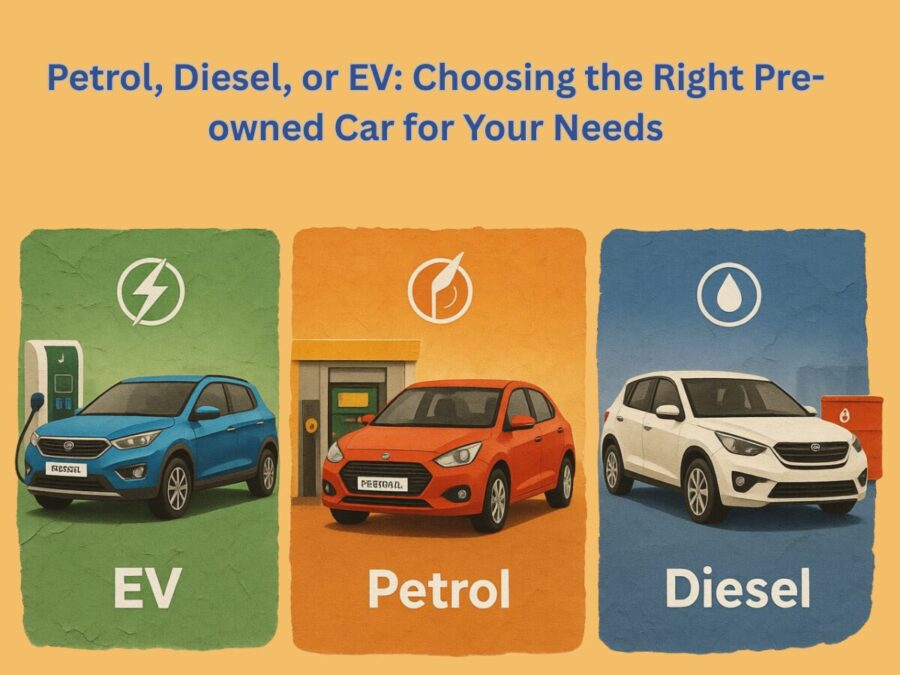
Diesel: built for the long haul
Diesel cars come into their own for high-mileage drivers. They deliver better fuel efficiency on long journeys and produce strong pulling power, which makes them well suited to highways and heavier vehicles such as larger SUVs.
The catch is cost. Diesel cars usually carry a higher purchase price and can be more expensive to maintain, since their parts and servicing tend to cost more. Diesel makes financial sense mainly for those who drive long distances regularly, where the fuel savings outweigh the higher running and buying costs. For a low-mileage city driver, a diesel car rarely pays back its premium.
Electric: low running costs, a little planning
Electric cars are a growing presence in the used market, and they offer the lowest running costs of the three. Charging at home is far cheaper than filling a tank, and with fewer moving parts, electric cars often need less routine maintenance.
An electric car asks for some planning. You need reliable access to charging, and you should consider the driving range and the condition of the battery, which is the heart of an electric car. For a buyer with a settled routine and a place to charge, the low running costs can be very appealing.
Weigh the whole cost, not just the price.
Whichever fuel you lean towards, judge the full cost of ownership rather than the purchase price alone. A cheaper car that costs more to run and maintain can end up dearer over a few years than a slightly pricier one that is efficient and reliable.
Factor in the fuel or charging cost for your distance, the expected maintenance, and how well the car is likely to hold its value. Buyers who consider these running costs upfront make steadier, more satisfying choices.
Check the condition through the fuel-type lens
Each fuel type has its own points to check in a used car. For petrol and diesel cars, look closely at the engine, the service history, and any signs of neglect. For diesel cars in particular, confirm regular servicing, since they can be less forgiving of poor upkeep. For electric cars, pay special attention to the battery health and remaining range, as these shape both the usefulness and the value of the car.
A detailed inspection and a clear service record matter for all three. The Mobility Intelligence Report 2026 points to verified inspections as a key reason buyers now trust the pre-owned market, and that assurance is just as important when judging fuel-specific wear.
Match the car to your life
There is no single best fuel type, only the one that best fits your driving. Petrol suits light, city-based use at a low upfront cost. Diesel rewards high-mileage, long-distance drivers. Electric offers the lowest running costs for those who can charge conveniently. Start from your own routine, weigh the full cost, and check the condition carefully, and the right choice becomes clear.
The pre-owned car market continues to grow as buyers seek affordable, reliable, and sensible ways to own a vehicle. A wider choice of petrol, diesel, and electric options, backed by verified inspections and transparent pricing, is helping buyers match a car to their real needs.