
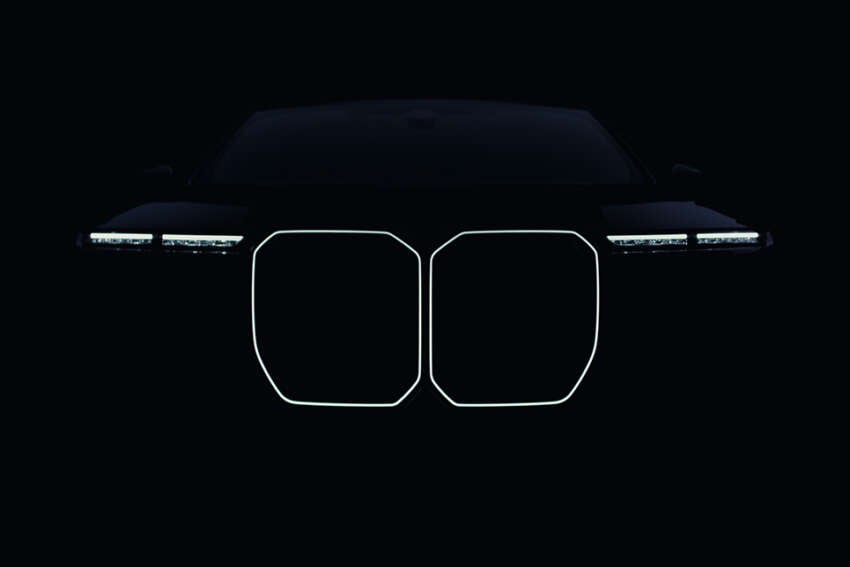
The new updated version of the BMW i7 is ready for its global reveal on April 22 at Auto China 2026 in Beijing. This update is not just a light refresh. It brings a new battery setup, some design and tech upgrades that may improve the overall package.
This will also be the first BMW model to use the new battery setup developed with Rimac Technology. The system is part of BMW’s wider Neue Klasse direction and may later expand to other models as well.
The current i7 already sits as BMW’s top electric sedan, and this facelift keeps that position strong.
New Battery System With Big Change
The biggest update is under the body.
Key points
- New BMW Gen6 cylindrical cells
- Joint development with Rimac Technology
- New modular battery housing system
- Around 20 percent higher energy density
- Faster charging compared to current model
- Better range expected than current 603 km WLTP
The battery uses BMW 4695 cylindrical cells. These are built with 46 mm diameter and 95 mm height. Rimac handles the structure and smart battery control system.
This setup is also made to support future battery upgrades without changing the full pack.
BMW i7 Facelift Battery Update
| Feature | Details |
|---|---|
| Cell type | Gen6 cylindrical 4695 |
| Partner | Rimac Technology |
| Energy gain | Around 20 percent higher |
| Range target | More than current 603 km |
| Charging | Faster than outgoing model |
| Production | Zagreb facility, Croatia |
Range and Performance Outlook
As mentioned in the above table, current model offers a WLTP range of up to 603 km. With the new battery system, the updated version may offer improved range along with quicker charging performance.
Expected improvements may include better energy efficiency, smoother long distance driving capability and faster charging stops.
Design Changes May Stay Light
The exterior design is expected to remain mostly unchanged, with only a few updates likely.
- Slightly revised front grille design
- Larger and more defined DRL units
- Mild bumper adjustments
- Cleaner front look inspired by newer BMW EV styling
- Overall silhouette likely unchanged
The aim is to keep the same identity but make it look more aligned with new BMW EV styling.
Cabin Likely to Remain Premium
The interior is expected to stay unchanged, with only minor tech improvements
Likely continuation includes
- Large curved digital display setup
- Bowers & Wilkins premium sound system
- Rear seat massage and cooling functions
- High comfort executive seating layout
Some small feature additions linked to the updated system software may also be introduced, but no major redesign is expected inside.
Expected Position and Rival Space
The Mercedes-Benz EQS will remain the main rival for this model. Other luxury EV sedans in the segment will also compete with it.
India may also get this updated version after global launch depending on BMW’s EV rollout plan.