
Hyundai Motor India recently launched the new Bayon SUV, strategically positioning it between the Venue and the Creta in its expanding utility portfolio. While the initial price gap between the Bayon and the Creta is relatively narrow, sparking early questions regarding potential product overlap, Hyundai’s broader strategy is now becoming clear. The Bayon can fill the space left by the current Creta when the new-generation model moves up the price ladder.
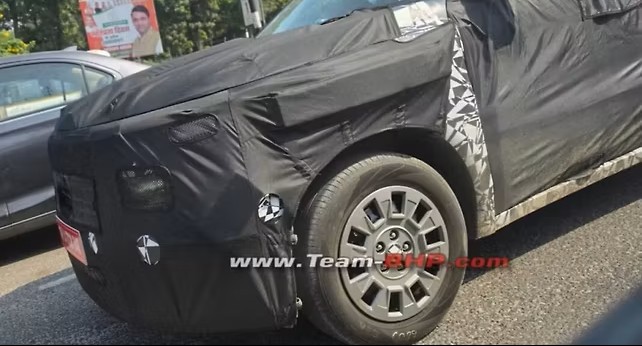
Now, the next-generation Creta has been spotted testing again. The latest test vehicle was seen in Manali and gives us a few more clues about Hyundai’s new midsize SUV.
Exterior
The SUV seen in Manali is heavily camouflaged, but several details are visible. It appears to have a more upright and boxy shape than the current Creta. Hyundai is also expected to give it sharper lines and a more modern front design.
Some of the visible and expected changes include:
- A larger, more upright grille
- H-shaped LED daytime running lights
- Split headlamp arrangement
- New LED projector headlamps
- Flush-type door handles
- Revised ORVMs with camera hardware
- New alloy wheel designs
- Circular wheel arches
- A sharper window line
- A roof-mounted spoiler
- New rear lighting elements
- A wider-looking rear bumper
The latest test car appears to be a lower-spec version, as it uses 16-inch steel wheels with covers and 205/65 R16 tyres. Higher variants are expected to get 17-inch wheels, while top trims could use 18-inch wheels.
At the rear, the new Creta is expected to get a flatter tailgate, a raked rear windscreen and a new three-part LED lighting design.

Interior
The cabin is also expected to see a major change. Hyundai has already shown its new Pleos Connect technology on test vehicles, and the system could be offered on the next Creta.
The setup uses a large central touchscreen with a slim display placed in front of the driver. Important information such as speed and fuel level can be shown on this smaller display.
The new Creta is also expected to become a Software Defined Vehicle. This could allow Hyundai to add or improve certain functions through over-the-air updates without requiring a visit to a service centre.
The final Indian-spec cabin and equipment list have not been revealed yet.
Powertrain
The new Creta is expected to get a strong-hybrid option. This could make it a more direct rival to SUVs such as the Grand Vitara and Hyryder.
For India, the hybrid system is expected to use a 1.5-litre naturally aspirated petrol engine with electric motors and a battery pack. Features such as regenerative braking and vehicle-to-load technology are also expected.
Hyundai has not confirmed the final power, torque, battery size or mileage figures.
The existing engines are also expected to continue:
| Engine | Expected power |
| 1.5-litre petrol | 115hp |
| 1.5-litre turbo-petrol | 160hp |
| 1.5-litre diesel | 116hp |
| 1.5-litre strong hybrid | To be confirmed |
Manual and automatic gearbox options are expected, although the exact combinations will be announced later.
Platform and size
The next Creta is expected to use Hyundai’s K3 platform, which also underpins the Kia Seltos. The new architecture could make the SUV longer and wider than the current model.
That could mean more room for passengers and luggage. Exact dimensions and boot capacity are not known yet.
Launch and rivals
The third-generation Creta is expected to arrive in India in the first half of 2027, although some reports point to the 2027-28 financial year.
Once launched, it will continue to compete in the midsize SUV segment against the Kia Seltos, Tata Sierra, Maruti Suzuki Grand Vitara, Toyota Urban Cruiser Hyryder, Honda Elevate, Skoda Kushaq and Volkswagen Taigun.
The possible hybrid version will give Hyundai another option in a segment where hybrid SUVs (like the newly introduced Duster hybrid) are already gaining attention.
Image Source – Team BHP