
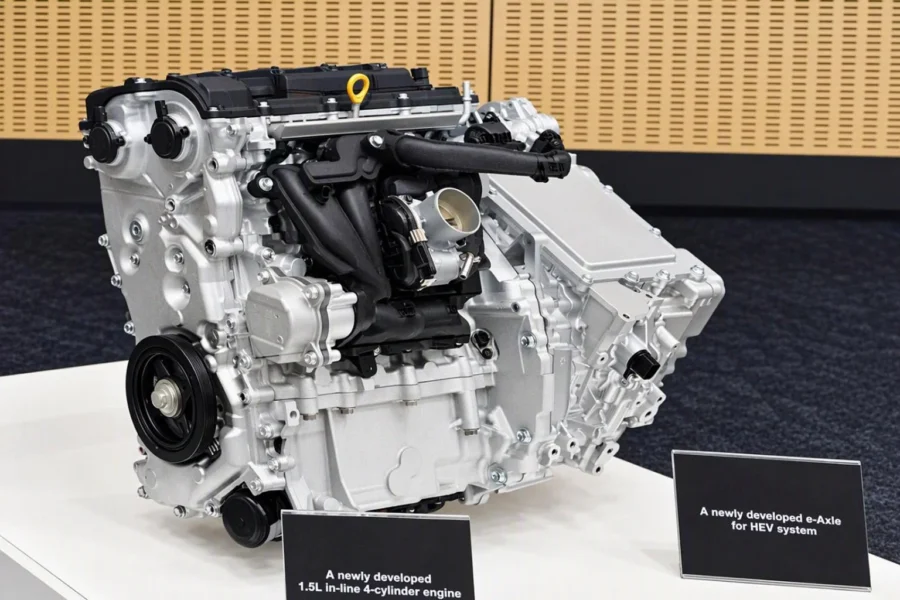
Toyota is developing an advanced hybrid powertrain engineered to maximize vehicle efficiency without relying on heavier, higher-capacity battery packs. The Japanese automaker is anchoring the project around a newly developed 1.5-litre four-cylinder petrol engine paired with a completely redesigned electronic hybrid architecture.
The brand is targeting a fuel economy improvement of more than 15 percent compared to the brand’s current strong-hybrid configurations. To ensure versatile applications across its global lineup, the new powertrain is being developed in both naturally aspirated and turbocharged formats.
Integrated Hybrid Architecture
Unlike traditional hybrid setups that adapt existing internal combustion engines to electric drivetrains, this new 1.5-litre unit has been designed from the ground up to operate solely as part of a dedicated hybrid network
Toyota has worked on the engine, electric motors and power electronics together. The company says this approach can help reduce losses and improve the way the different parts work together.
The naturally aspirated version is expected to offer performance similar to the company’s existing 1.8-litre engine and 1.5-litre three-cylinder unit.
Smaller powertrain, more space
Toyota is also working on reducing the size of the complete hybrid system. A smaller setup can give engineers more freedom when designing the vehicle.
It could allow a lower bonnet and create more room for other parts of the vehicle. The compact design may also help reduce aerodynamic drag.
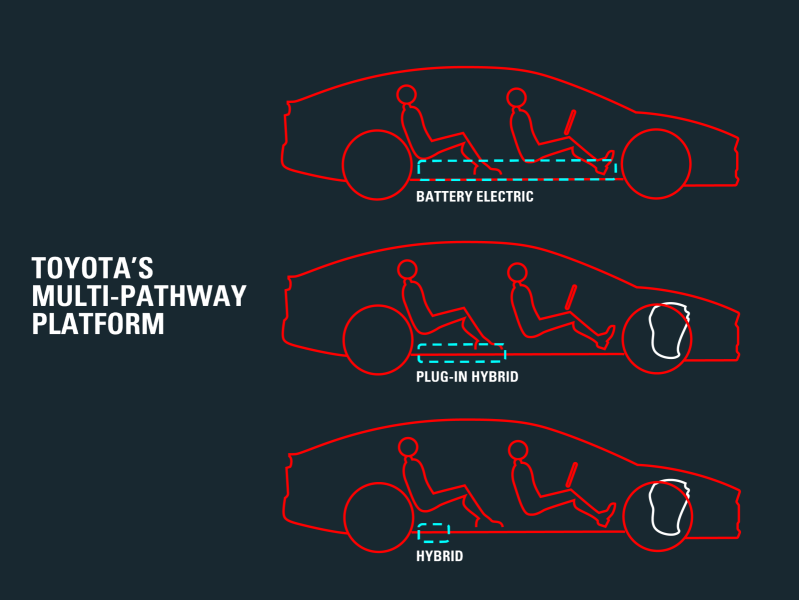
The new system is being developed for Toyota’s future multi-pathway vehicles. This means the same basic vehicle architecture can support different powertrain types.
| Powertrain | Planned support |
|---|---|
| Hybrid | Yes |
| Plug-in hybrid | Yes |
| Battery electric | Yes |
| Engine type | 1.5-litre four-cylinder |
| Engine versions | Naturally aspirated and turbocharged |
One platform for different powertrains
Toyota wants to use a common vehicle architecture for hybrid, plug-in hybrid and battery-electric models. This could help the company share development and manufacturing costs across different types of vehicles.
It would also give Toyota more flexibility at its factories. Production could be adjusted depending on demand for hybrids, plug-in hybrids or EVs in different markets.
The company is also looking at selling its new engine and hybrid technology to other manufacturers. Compatibility with renewable and carbon-neutral fuels is another part of its development plans.
What about India?
Toyota has not yet confirmed which Indian models could get the new 1.5-litre hybrid system. There is also no confirmation about local production or an India launch date.
The development is still relevant for the Indian market because Toyota already sells strong-hybrid models here. The Urban Cruiser Hyryder and Maruti Suzuki Grand Vitara currently use a 1.5-litre three-cylinder hybrid setup.
Toyota’s new four-cylinder system could give the company another option for future vehicles.
For now, the new powertrain is still under development. More details about its power, torque, launch timeline and India applications are expected later.