
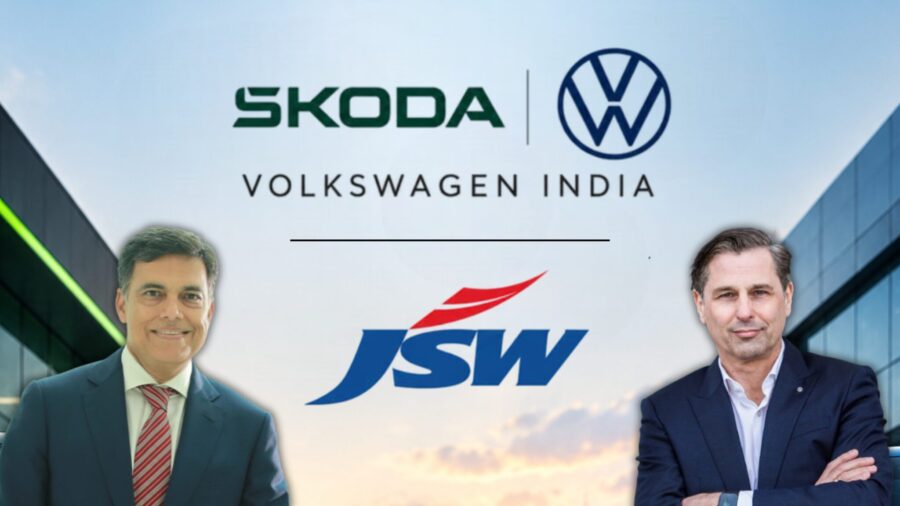
So its officially happening. The reports have been in the talks for quite some time now, and it seems to be moving ahead as Skoda Auto and JSW Green Mobility have signed a non-binding Memorandum of Understanding (MoU). The two sides are now looking at a possible joint venture for passenger vehicles in India.
The plan is bigger than just electric cars. The proposed partnership can cover petrol and diesel models, hybrids, plug-in hybrids and electric vehicles. It can also include exports from India.
What the proposed partnership means
The idea is to bring Skoda-VW’s vehicle and engineering experience together with JSW’s manufacturing and local business strength. The two companies will now work on the details before any final agreement is signed.
The proposed setup is expected to have joint control. Reports have indicated a possible 51:49 structure, with JSW holding the larger share. However, the final ownership pattern and commercial terms still need to be agreed upon.
| Key Detail | Information |
|---|---|
| Companies | Skoda Auto and JSW Green Mobility |
| Agreement | Non-binding MoU |
| Proposed JV | Passenger vehicle business |
| Possible structure | 51:49 |
| Majority stake | JSW |
| Powertrains | ICE, hybrid, plug-in hybrid and EV |
| India operations | Manufacturing, R&D and sales |
| Exports | Planned |
| Binding agreement target | December 2026 |
| Possible investment | More than €1 billion |
More cars could be produced in India
One of the main areas under discussion is local manufacturing. A stronger local setup could help Skoda and Volkswagen bring more products to India with a higher level of local content.
The partnership could also help spread production and development costs over a larger number of vehicles. This could be useful as the Indian market continues to see strong demand for SUVs and electric vehicles.
Some of the possible products have been discussed earlier, including vehicles based on Volkswagen Group’s India Main Platform for electric cars. However, the companies have not confirmed specific models under the proposed JV.
EVs are not the only part
Electric vehicles will be an important part of the plan, but the proposed partnership is not limited to EVs.
The companies are also discussing conventional petrol and diesel vehicles as well as hybrid and plug-in hybrid models. This gives the proposed venture room to work across different sections of the Indian car market.
For buyers, this could mean a wider range of Skoda and Volkswagen products over the next few years.
Manufacturing could get a bigger role
The proposed JV could make use of existing manufacturing facilities linked to Skoda-VW and JSW.
The Chakan and Chhatrapati Sambhajinagar facilities are among the assets that could play a role in the future setup. Better use of these plants could also help increase production volumes.
JSW’s automotive business already has a presence in India through its partnership with MG Motor India. A successful Skoda-VW venture would give the group another major presence in passenger cars.
India could also supply other markets
Exports are another important part of the proposal. Vehicles made in India could be supplied to selected international markets.
This could give India a larger role in Volkswagen Group’s production plans for the region. It could also help the proposed venture achieve higher volumes from the same manufacturing base.
What happens next?
The MoU is not a final deal. The two sides still have to complete discussions, due diligence, internal approvals and regulatory processes.
A binding agreement is being targeted by December 2026. Until that happens, details such as the final investment, ownership structure and exact model plans can still change.
Luxury brands such as Audi, Porsche, Lamborghini and Bentley are also not expected to be part of the proposed venture. The focus is on the mass-market passenger vehicle business.