
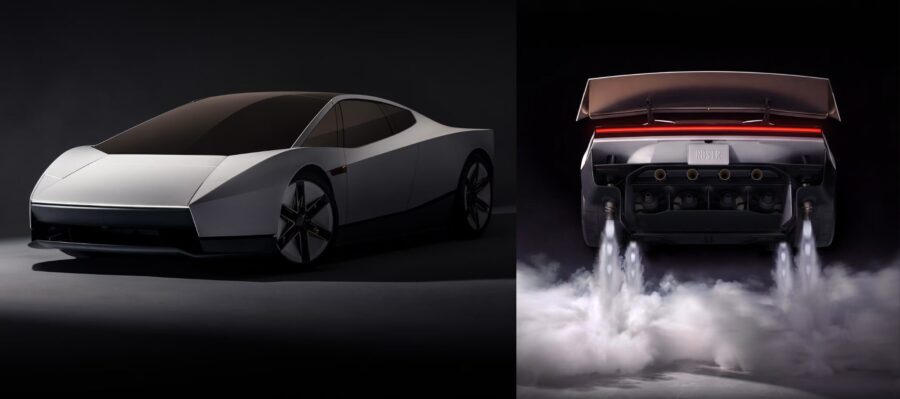
We have all wondered at some point during our childhood: Can a car actually fly? Tesla just made that dream feel a whole lot closer to reality. The company has officially unveiled a pre-production version of its next-generation electric sports car, featuring cold-gas thrusters developed using genuine SpaceX technology.
Scheduled to enter production in 2028, the revolutionary vehicle will be available in three distinct variants, ranging from a track-focused road car to a full-fledged airborne machine.
Breaking Down the Three Variants
| Version | Key Details |
|---|---|
| Performance | Two seats, road-suction system, 0–60 mph in under 1.6 seconds |
| Thrust | Two seats, rear cold-gas thrusters, 0–60 mph in under 0.9 seconds |
| Rocket | Single seat, full perimeter-flight system, 0–60 mph in under 0.59 seconds |
The baseline Performance model features a specialized suction system that generates an incredible 2G of grip. By literally vacuuming the car down to the tarmac, it maximizes cornering stability and even allows the vehicle to tackle impossibly steep surfaces.
Stepping up to the Thrust variant introduces rear-mounted cold-gas thrusters. This aerospace hardware drops the car’s 0–60 mph acceleration time to a mind-boggling sub-0.9 seconds.
The ultimate expression of this lineup is the Rocket edition. This single-seater features perimeter-mounted thrusters capable of firing both forward and upward. Tesla claims it can rocket from 0–60 mph in less than 0.59 seconds and hit a top speed of over 230 mph (roughly 370 km/h).
Aerospace Tech Meets Asphalt
During the reveal event, the prototype executed a controlled airborne flip and a barrel roll. The company even demonstrated the car driving completely upside down.
This sci-fi performance is powered by compressed gas stored in ultra-strong, carbon-fiber-overwrapped pressure vessels positioned throughout the chassis. Tesla states these thrusters deliver four to five times the force of traditional tires. While extra gas storage yields longer flight windows, Tesla hasn’t yet specified exactly how many minutes of airborne time drivers can expect.
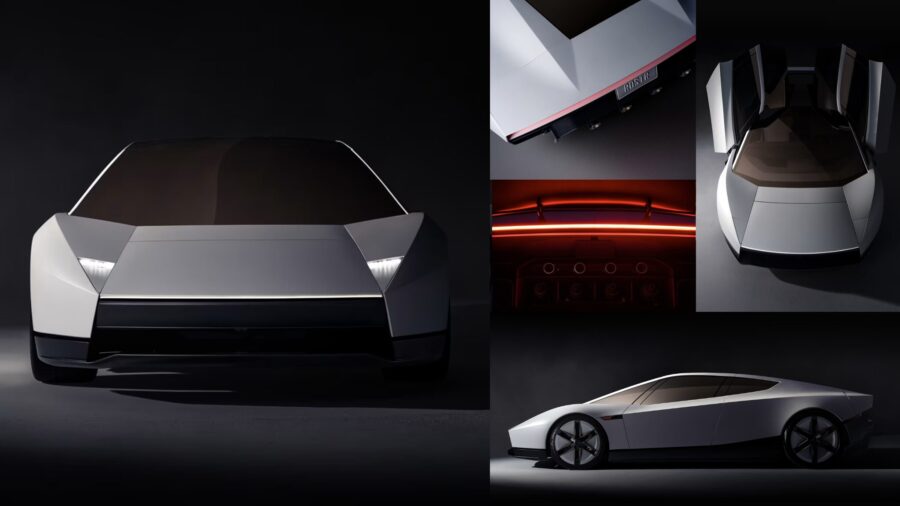
The vehicle also leans heavily on active aerodynamics. Activating “Track Mode” completely alters the car’s body configuration and deploys a massive rear wing to generate downforce that rivals modern Formula 1 cars.
Stealth Fighter Design and Cabin
Visually, the Roadster draws heavy inspiration from iconic aircraft like the SR-71 Blackbird and the F-35 fighter jet. The exterior features razor-sharp body lines, hidden headlights, a seamless full-width rear light bar, and completely flush body panels.
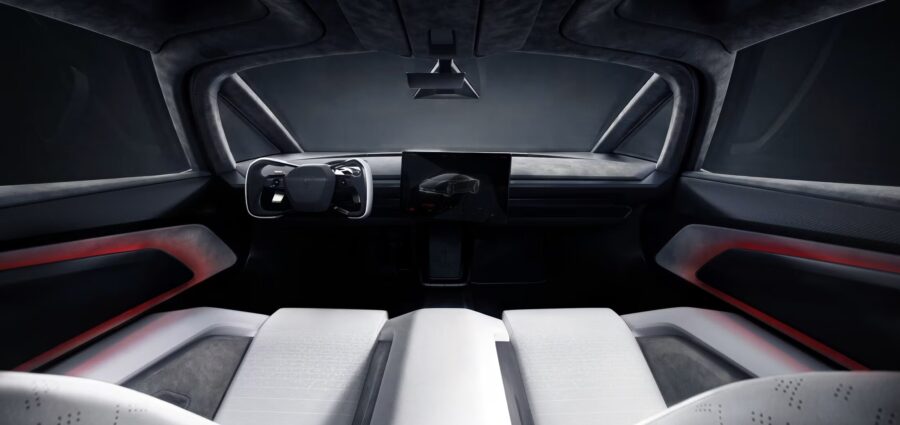
To keep the car as agile as possible, Tesla utilized an advanced mix of magnesium, titanium, and carbon fiber. Inside, the minimalist cabin features an ultra-white and grey microsuede color palette. To shave off precious kilograms, Tesla opted for fixed-position, heavily bolstered racing seats and simplified manual controls. Critical specifications like total curb weight, battery capacity, and horsepower remain under wraps for now.
Range and Defying Gravity
Even with all this extreme performance, Tesla claims the vehicle will deliver a usable range of more than 300 miles (over 483 km). It is worth noting that all of Tesla’s jaw-dropping acceleration claims are measured using the standard 0–60 mph sprint rather than the traditional 0–100 km/h metric.
In another display of its physics-defying engineering, Tesla showed the car utilizing its high-powered suction system to drive up a vertical ramp and securely hold its own weight upside down.
India Bookings and Availability
Indian enthusiasts looking to secure a unit can already act. Bookings for both the Performance and Thrust models are officially open in India with a reservation amount of Rs 5 lakh. However, the top-tier Rocket variant will not be available to the general public, accessible only via an exclusive, invite-only program.
Tesla has not locked in the final retail pricing just yet. Because official production is slated for 2028, final mechanical specifications and shipping timelines are subject to change as development continues.
One thing is certain: this isn’t just another electric sports car. Tesla is using the new Roadster to completely redraw the boundaries between automotive engineering and aerospace technology.