

The Vietnamese EV maker is separating its factories from its core business. It sounds complicated, but the strategy is actually quite elegant.
If you’ve been following VinFast’s journey from ambitious Vietnamese upstart to Nasdaq-listed global EV brand, you’ll know the company has never done anything quietly. Now, in what could be one of its most consequential decisions yet, VinFast has announced a major restructuring of its Vietnam operations, one that strips away the heavy burden of factory ownership and positions the company to run leaner, move faster, and potentially turn profitable well ahead of schedule.
Here’s what’s happening, and why it matters.
The Split, Explained Simply
VinFast is essentially dividing itself in two.
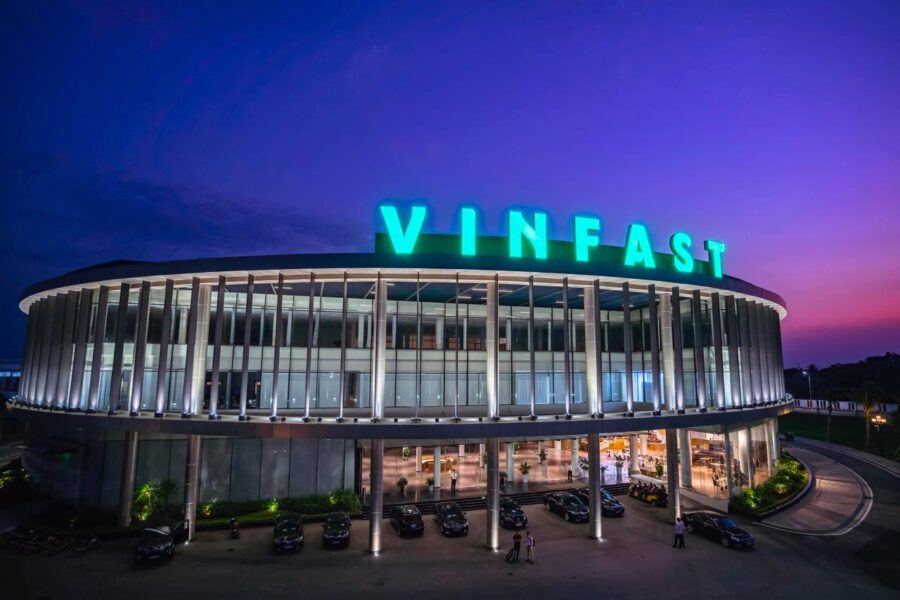
Its manufacturing assets, the sprawling factories in Hai Phong and Ha Tinh, will be carved out into a new entity called VFTP (VinFast Trading and Production JSC). This new company will be handed over to an investor group led by Future Investment and Development Research JSC, with VinFast founder Pham Nhat Vuong personally participating in the transaction. The deal is valued at approximately USD 530 million.
VFTP will continue building cars, but now as a contract manufacturer, producing vehicles for VinFast under defined agreements rather than as part of VinFast itself. Critically, VFTP also absorbs around USD 7.3 billion in liabilities tied to manufacturing operations. That’s a staggering amount of debt that will no longer sit on VinFast’s balance sheet.
What remains with VinFast, the listed entity, is arguably the more valuable half: R&D, product engineering, technology development, branding, sales, marketing, after-sales service, and customer experience. In other words, everything that actually defines a modern automotive brand in 2025.

Why This Is Smart Business
The auto industry has been quietly shifting toward asset-light models for years. Apple doesn’t own the factories that build iPhones. Nike doesn’t run the facilities that stitch its sneakers. The most valuable global brands have long understood that owning manufacturing is capital-intensive, operationally complex, and strategically limiting.
For EV companies, this tension is even sharper. They’re simultaneously expected to invest in battery technology, software platforms, autonomous systems, charging infrastructure, and global market development. Trying to do all of that while also owning and running massive factories stretches capital dangerously thin.
By outsourcing its domestic manufacturing to VFTP, VinFast frees up both capital and management bandwidth to focus on what will actually differentiate it in the long run: technology, design, and brand. The company retains full control over product standards and quality, the factories still build to VinFast’s specs, but without carrying the full financial weight of those assets.
Reading Between the Lines
A few things in this announcement are worth reading carefully.
First, the USD 7.3 billion in liabilities being absorbed by VFTP is not a trivial number. VinFast’s balance sheet has been a concern for analysts since its Nasdaq listing, and offloading that debt burden is significant. It doesn’t make the debt disappear, but it restructures who bears it and changes the financial optics of the listed company considerably.
Second, the involvement of Pham Nhat Vuong in the acquiring group is telling. This isn’t an arm’s-length sale to an outside party. It keeps the manufacturing operations firmly within the Vingroup ecosystem, ensuring continuity and control even as the legal structure changes. It’s a reorganisation as much as it is a transaction.
Third, and perhaps most interesting for the broader industry: VFTP is now theoretically open to contract manufacturing for other brands. VNDirect Securities analyst Quynh Cao noted that this could position Vietnam as a regional EV production hub, potentially attracting other EV brands or mobility players looking for manufacturing capacity in Southeast Asia, alongside established hubs like Thailand and Indonesia. That’s a quiet but potentially significant geopolitical play for Vietnam’s industrial ambitions.
What It Means for VinFast Going Forward
The restructuring is projected to move VinFast’s profitability target forward to 2027, a meaningful shift for a company that has burned through capital aggressively in its global expansion push.
For customers, the company is clear: nothing changes at the retail end. Same factories, same quality standards, same service networks. The restructuring is a back-end financial and operational move, not a product story.
But strategically, this marks VinFast’s clearest signal yet that it wants to be judged not as a manufacturing company with a branding problem, but as a technology and mobility brand that happens to manufacture. In a world where software-defined vehicles and brand ecosystems increasingly drive value, that’s exactly the right direction to be moving in.
The bet is bold. The logic, however, is sound.