
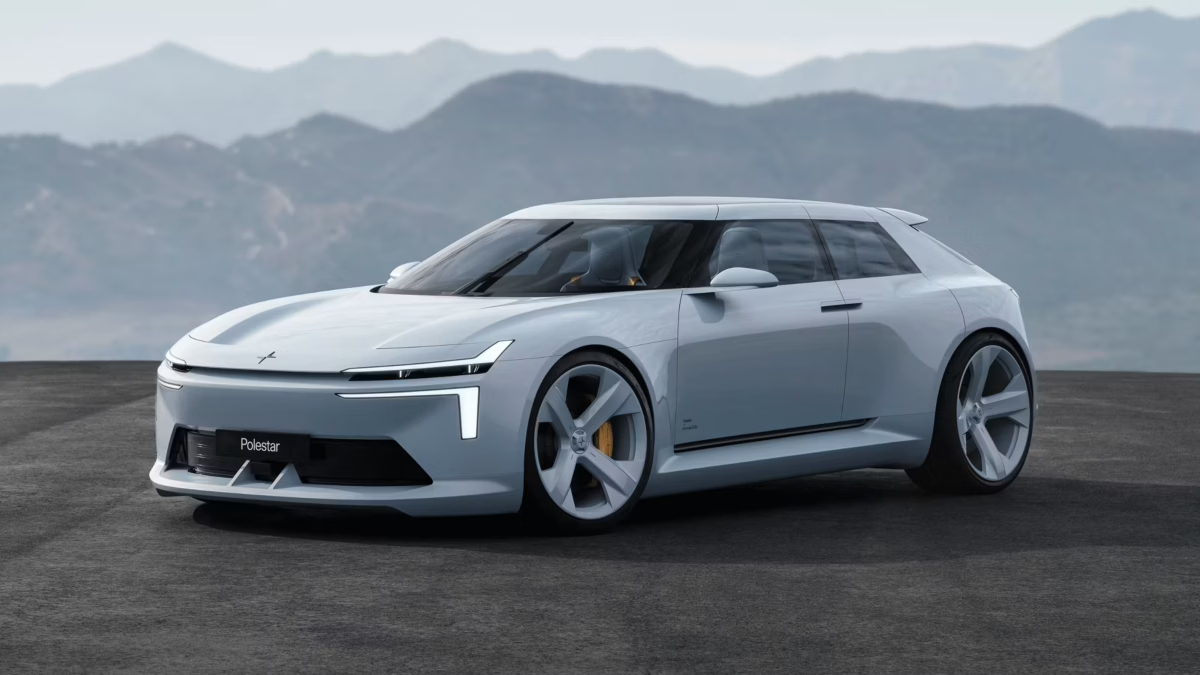
Meet one of the most striking concept cars of 2026, the Polestar Formula 2030. With its low roof, long bonnet, muscular proportions and unusual cabin design, this electric concept looks quite different from the cars we see on the road today. The Swedish carmaker has presented it as a preview of its future design direction. While it will not enter production in its current form, several of its styling elements are expected to appear on upcoming Polestar models from 2027.
The Formula 2030 also brings some interesting technology into the picture. It gets a four-seat layout, adaptive seats, large digital displays and Google Gemini AI integration. Polestar has also given the concept three driving modes, each with a different seating and steering arrangement.
Polestar Formula 2030: Exterior Design
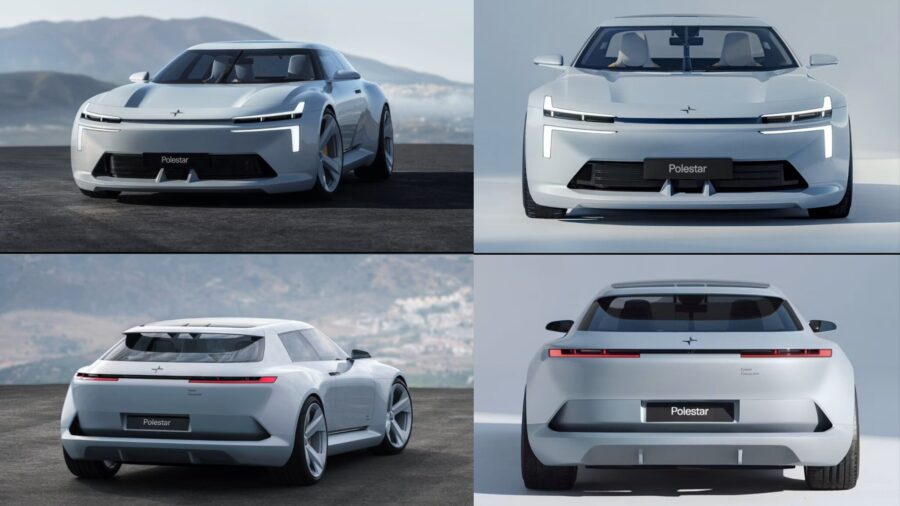
The concept has shooting-brake proportions with a long bonnet and a sloping roofline. Its body measures 4,680mm in length, 2,021mm in width and 1,350mm in height. The wheelbase stands at 2,780mm.
At the front, the car gets split Dual Blade LED headlamps connected by a slim opening. The lower bumper has a large air dam, integrated winglets and a front splitter. Its side profile features short overhangs, muscular rear wheel arches and large 22-inch four-spoke alloy wheels.
Some other exterior details include:
- Nitrogen exterior paint finish.
- Swedish Gold Brembo brake callipers.
- Opposite-opening doors.
- Slim Single Blade LED tail-lamps.
- Panoramic glass roof with a rear windscreen design.
- Large roof spoiler and integrated rear diffuser.
- Hidden LiDAR sensor for autonomous driving technology.
The rear lighting stretches across the width of the car, while the aerodynamic openings give the back a distinctive appearance.
Polestar Formula 2030: Interior and Technology
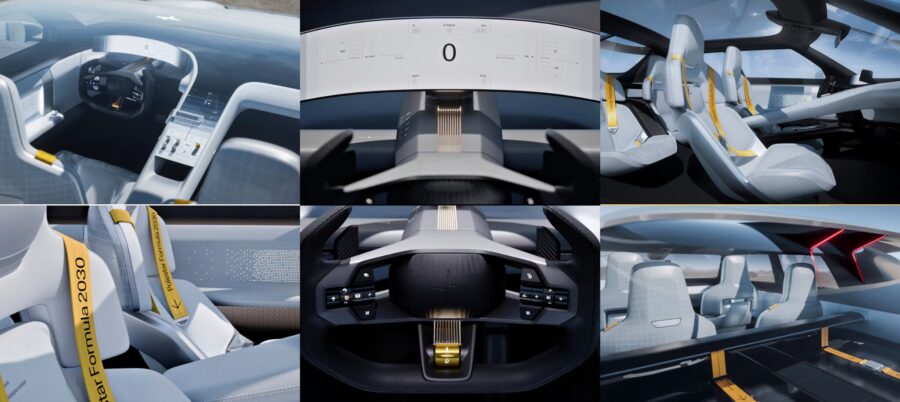
The cabin has a four-seat configuration, with individual seats for each passenger. These seats get inflatable side bolsters and cushions that can adjust according to the occupant’s body. The cabin uses a black and white colour combination with Swedish Gold details on the seatbelts, steering wheel and centre console.
The dashboard has a minimal layout with two main displays:
| Feature | Details |
|---|---|
| Driver display | 20-inch curved HyperDIM |
| Central touchscreen | 12.2-inch |
| Voice technology | Google Gemini AI |
| Seating capacity | Four passengers |
| Physical controls | Eight customisable switches |
| Wheels | 22-inch alloy wheels |
The central touchscreen supports Google Gemini AI, allowing occupants to use conversational voice commands to operate different functions. Polestar has also retained physical switches below the screen.
Three Driving Modes Explained
The Formula 2030 gets three modes called Normal, Performance and Autonomous. Each setting changes the position of the steering wheel, seats and display.
- Normal: Provides a conventional driving arrangement with the driver in control.
- Performance: Moves the steering wheel and HyperDIM display closer to the driver.
- Autonomous: Moves the steering wheel and driver’s seat apart to create more space when the car takes over driving.
Powertrain Details Yet to Be Revealed
Polestar has not shared the mechanical specifications of the Formula 2030. Battery capacity, motor configuration, power output, torque and driving range are yet to be announced. There is also no confirmation of a production version.
The Formula 2030 is a design preview rather than a future showroom model. However, its styling and cabin technology offer a look at what buyers could see in upcoming Polestar electric cars from 2027 onwards.