
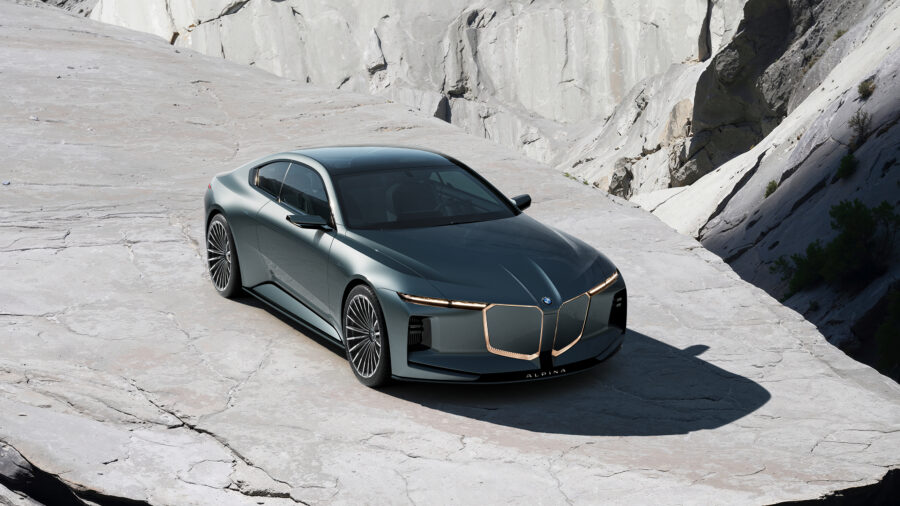
BMW has pulled the covers off the Vision ALPINA concept, showing what the future of the luxury performance brand could look like. The concept was revealed at Villa d’Este in Italy and previews the styling and character of upcoming ALPINA models under BMW ownership. A production version inspired by this car is expected to arrive in 2027.
With its stretched body and low roofline, the Vision ALPINA has the appearance of a classic luxury tourer. The car measures 5.2 metres in length and carries a wide, planted stance. Even while standing still, it gives the feeling of effortless speed mixed with long-distance comfort for four adults.
For years, ALPINA built its identity around comfort and usable performance together. While other brands focused heavily on sharp handling alone, ALPINA worked on making high-speed driving feel calm and effortless. The same thought process continues here as well.
The story behind that philosophy goes back to company founder Burkard Bovensiepen. During endurance racing years ago, he reportedly added extra padding to the driver’s seat because he believed a relaxed driver could perform better over long distances. That thinking slowly became one of the strongest parts of the ALPINA identity.
Engine and driving setup
The Vision ALPINA concept uses a front-mounted V8 engine. Full specifications are still under wraps, but reports suggest upcoming production cars may feature a 4.4-litre twin-turbo V8 engine.
Ride comfort also remains an important part of the package. The car keeps the Comfort Plus setup designed for smoother long-distance travel while still offering strong performance.
That balance between speed and comfort has always been part of the ALPINA character.
Exterior styling and design
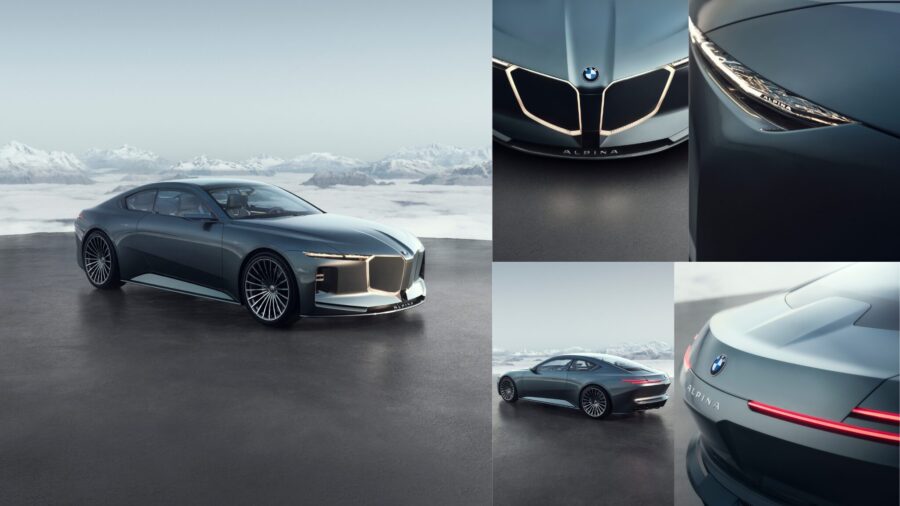
The front design carries the classic shark nose shape that has been linked with older BMW and ALPINA cars. The grille looks slim and neat, while the lighting setup uses a warm white tone inspired by early morning light over the Bavarian Alps.
A six-degree feature line starts from the lower front section, runs through the side profile and continues towards the rear. BMW says this line was designed to give the car a sense of motion without making the styling feel aggressive.
A lot of attention has gone into smaller hidden details as well.
- Slim front grille inspired by BMW 507
- Illuminated crystal detailing in headlamps
- Signature ALPINA deco stripes under clear coat
- Hidden illuminated grille graphics
- Machined ALPINA lettering on lower apron
- Four exhaust pipes at the rear
The V8 exhaust note has also been specially tuned. BMW says it delivers a deeper sound at lower speeds and becomes sharper and richer at higher revs.
The wheels are another major talking point.
- 22-inch front wheels
- 23-inch rear wheels
- Traditional 20-spoke ALPINA design
The body shape remains smooth and elegant without excessive cuts or oversized styling elements.
Cabin and luxury details
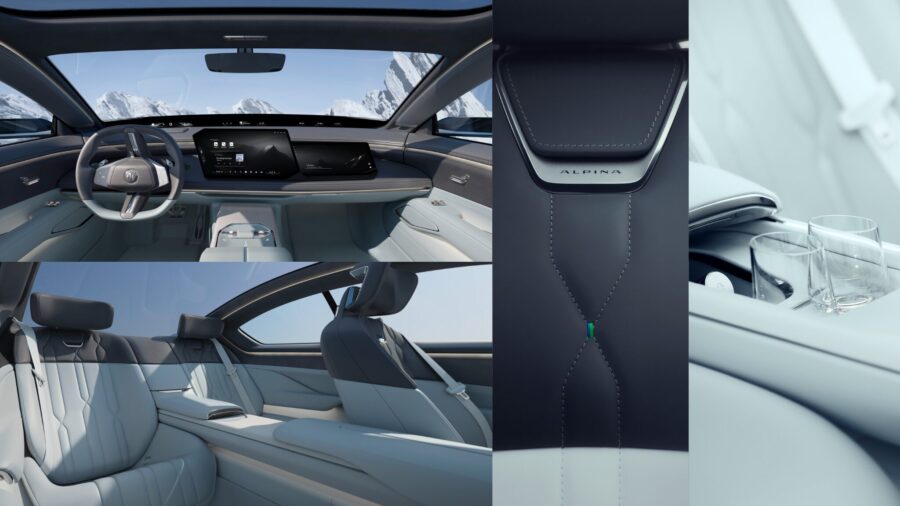
The cabin follows a luxury-focused layout with separate design sections across the dashboard. BMW has used darker shades for the upper half and lighter tones lower down to create contrast.
- 2+2 seating layout
- New steering wheel with ALPINA logo
- Full grain leather upholstery
- Open pore wood trim
- Machined metal detailing
- Heritage blue and green stitching
The dashboard gets BMW Panoramic iDrive along with a passenger display and a wide digital screen setup stretching across the front area.
Some controls also use crystal detailing, especially around functions linked to the driving experience.
One of the most unusual features sits at the rear. Crystal glasses rise automatically from the rear centre console through a powered mechanism. A glass water bottle is also placed beside them.
Each glass carries 20 ALPINA deco lines and remains secured through hidden magnets.
Future plans
BMW plans to position ALPINA between standard BMW models and Rolls-Royce in the luxury space. The first new generation ALPINA production model will arrive in 2027 based on the BMW 7 Series. The X7 is also expected to receive the ALPINA treatment later on.
An electric ALPINA model is also being studied, although petrol powered cars remain the main priority right now.