
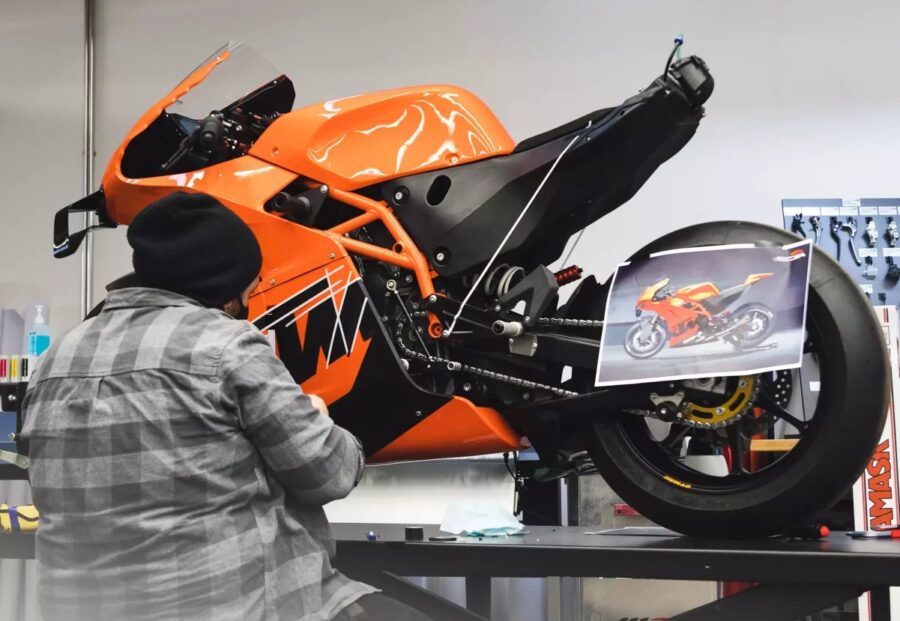
Big changes often begin silently. In KTM’s case, a relationship that defined the way its motorcycles look and feel for decades now has come to a turning point.
KTM has officially ended its ties with KISKA, the Salzburg-based design studio who has worked closely with the brand since the early 1990s. As part of this move, KTM has sold all its remaining shares in KISKA to Loxone GmbH.

This step is part of a broader restructuring process after Bajaj Auto assumed control of Pierer Mobility. Cost control and tighter internal processes seem to be a major reason for the decision.
KTM is now preparing to develop its own design studio.
The new centre will be based in Salzburg not in Mattighofen where KTM’s development centre is located. The intention is to bring styling and brand direction closer to the company itself.
What changes and what does not
- For now, KTM will keep working with KISKA.
- Access to KISKA’s design resources is still open
- Motorscycle designs in the near future are unlikely to look different
- Product development cycles mean visible changes will take time
KISKA’s role in KTM’s rise can not be ignored. The sharp lines, aggressive stance and bold visual identity that we see on bikes such as the RC and Adventure series were shaped by the agency. Beyond motorcycles, KISKA also handled branding, riding gear and communication work.
With KTM no longer its main shareholder, KISKA is changing focus. The agency plans to expand work with several global clients and not rely too much on one brand again. The transition has not been easy with staff reductions already reported following KTM’s financial reset.
For KTM fans, this is not a moment of loss. The brand is still loyal to the design language people recognise. What changes is where those ideas now take shape.