
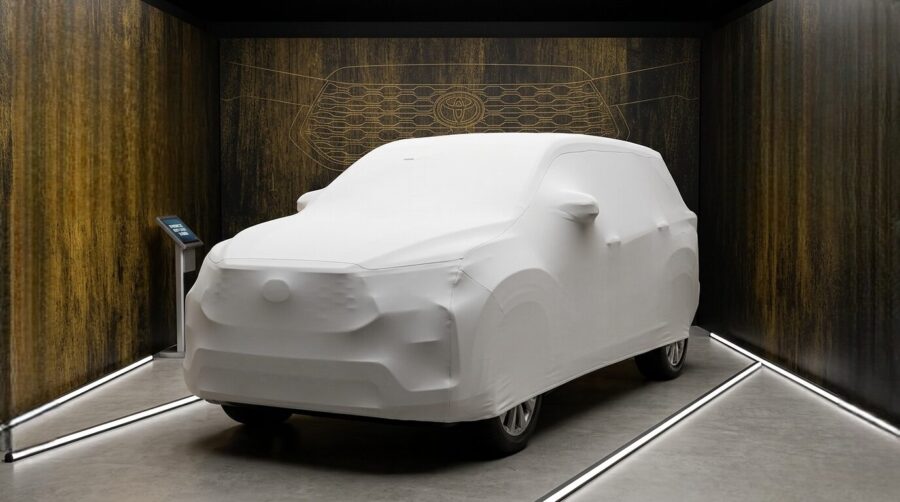
For over two decades, the Toyota Innova has been the undisputed king of Indian family road trips – a name synonymous with bulletproof reliability and couch-like comfort. The legendary MPV is about to undergo its most radical evolution yet, with Toyota expected to unveil the highly anticipated Innova HyCross facelift in India on November 26. This time, changes may go beyond a fresh face. The updated MPV is expected to bring flex-fuel hybrid technology, allowing it to use fuel with a higher share of ethanol.
The HyCross arrived in 2022 and moved the Innova line-up to a petrol-based platform. The facelift will be its first substantial update since launch.
Toyota Innova HyCross facelift: What will change?
Spy images and patent drawings point to a revised front design. The large honeycomb grille could make way for a rectangular mesh section, with a cleaner central panel and updated bumper. The design may take cues from Toyota’s newer SUVs, including the Hilux.
Expected exterior changes include:
- Slimmer-looking headlamps and a revised grille.
- A redesigned front bumper and fog-lamp area.
- New alloy wheel designs.
- Possible changes to the rear bumper and tail-lamp detailing.
The side profile is likely to look familiar, and the tailgate may keep its current shape.
The cabin is expected to retain its dashboard layout. Possible updates include new upholstery, a revised driver display and a larger touchscreen. Toyota could also update the 360-degree camera and connected-car functions. A panoramic sunroof, powered seats and ventilated front seats may continue, with equipment varying by variant.
Flex-fuel hybrid powertrain
The main technical change is expected to be a flex-fuel version of the HyCross hybrid. Toyota displayed a flex-fuel hybrid prototype based on this MPV in India in 2023. It used a modified 2.0-litre, four-cylinder petrol engine designed for fuel containing up to 85 per cent ethanol, known as E85.
The engine needed changes to handle ethanol, including different spark plugs and piston rings for better corrosion resistance.
Reports now point to an E100-capable version, which could use fuel containing up to 100 per cent ethanol. Toyota has not confirmed the production model’s final fuel compatibility or specifications.
The hybrid system pairs the engine with an electric motor and battery. Toyota previously said its prototype could deliver up to 50 per cent higher fuel efficiency, though results will depend on the final system, fuel and driving conditions. It also claimed a low well-to-wheel emissions footprint for the prototype.
What about the current engines?
The HyCross is offered with a 2.0-litre petrol engine and CVT, alongside a 2.0-litre strong-hybrid option with an e-CVT. It is not yet clear whether these powertrains will continue unchanged or how Toyota will position the flex-fuel version.
A separate flex-fuel variant could cost more because of its additional hardware. Pricing, variant details and the full feature list are expected closer to the unveiling.
Toyota’s announcement should confirm the design updates and clarify whether the ethanol-capable hybrid is ready for production.