
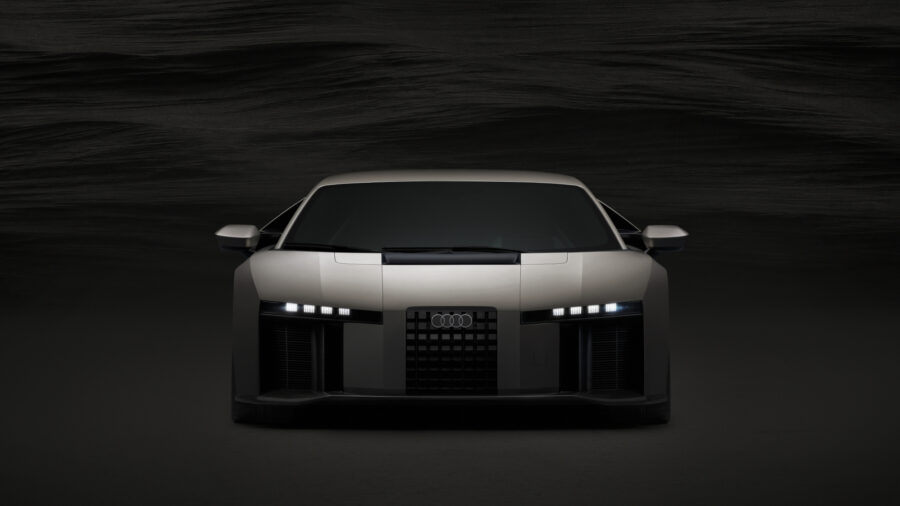
Audi has taken the wraps off the new Nuvolari, a limited-production supercar that now sits at the top of the brand’s lineup. Named after legendary racing driver Tazio Nuvolari, the car brings together a powerful hybrid system, lightweight construction and technology borrowed directly from Formula 1.
The Nuvolari also marks the spiritual successor to the Audi R8 and becomes the most powerful road-going Audi ever built. Only 499 units will be produced globally, with deliveries scheduled to begin in 2027.
Quick Specifications
| Specification | Audi Nuvolari |
|---|---|
| Engine | 4.0-litre Twin Turbo V8 |
| Electric Motors | 3 |
| Total Output | 1,001 PS |
| Battery | 7.3 kWh |
| 0 to 100 kmph | 2.6 seconds |
| 0 to 200 kmph | 6.8 seconds |
| Top Speed | Over 350 kmph |
| Drive System | All Wheel Drive |
| Production | 499 Units |
| Launch | 2027 |
A V8 Engine Backed By Three Electric Motors
At its heart is a mid-mounted 4.0-litre twin-turbocharged V8 engine producing 800 hp. The engine can rev all the way to 10,000 rpm, a figure usually associated with race cars.
Supporting the V8 are three electric motors.
- Two motors are mounted at the front axle
- One motor sits between the engine and gearbox
- Combined output reaches 1,001 PS
- Battery capacity stands at 7.3 kWh
The setup shares its basic architecture with the Lamborghini Temerario, although Audi says the Nuvolari has been tuned to deliver a completely different driving character. The larger battery also contributes to the higher power output.
As per the brand, this setup delivers instant response while maintaining strong performance at high speeds. The battery can also support short-distance pure electric driving before the V8 comes into action.
Acceleration Figures That Rival Hypercars
The numbers are extremely impressive.
- 0 to 100 kmph in 2.6 seconds
- 0 to 200 kmph in 6.8 seconds
- Top speed exceeds 350 kmph
Audi claims the car reaches 200 kmph significantly quicker than several famous hybrid supercars from the previous generation.
Power is sent to all four wheels through Audi’s latest Quattro all-wheel-drive system, helping the car put down its massive performance effectively.
Carbon Fibre Used Almost Everywhere
The Nuvolari becomes the first production Audi to use a carbon-fibre exterior. Most body panels are made from carbon fibre reinforced polymer. Audi combines this with its aluminium spaceframe structure to reduce weight while maintaining high rigidity.
Other highlights include:
- Formula 1 style carbon manufacturing process
- Heat-resistant materials in critical areas
- Forged centre-lock wheels
- Lightweight performance-focused construction
Audi has not revealed the final weight figures, but the extensive use of carbon fibre is expected to make it lighter than several rivals in this segment.
Aerodynamics Developed With F1 Input
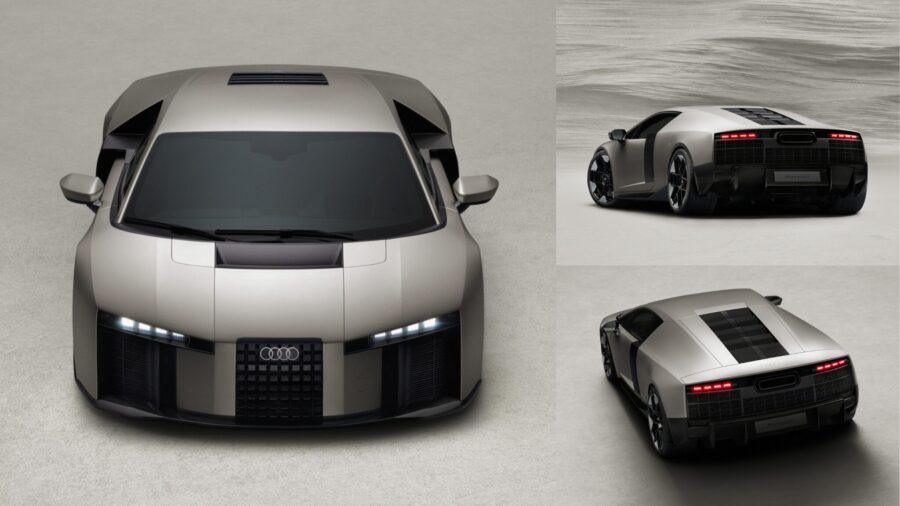
The shape of the Nuvolari is designed around airflow management. A front S-duct system channels air through the body to improve cooling and increase downforce. Large air intakes help cool the brakes, engine and hybrid components.
The design itself takes inspiration from Audi’s latest Concept C while retaining proportions expected from a mid-engined supercar. Clean body surfaces, sharp lighting elements and a dramatic rear section help give it a distinctive identity.
The rear wing can automatically change position depending on driving conditions.
Available settings include:
- Closed
- Low Downforce
- High Downforce
In its most aggressive setup, the system can generate more than 400 kg of downforce.
Audi Formula 1 drivers Gabriel Bortoleto and Nico Hulkenberg were involved during development and testing.
Advanced Quattro System
The Nuvolari introduces a new technology called Quattro Predictive Ride.
The system constantly monitors:
- Steering angle
- Vehicle acceleration
- Grip levels
- Yaw movement
Using this data, power can be directed to individual wheels for improved stability and cornering performance.
Drivers can choose from several modes:
- E-Hybrid
- Balanced
- Dynamic
- Dynamic+
- Track
Track mode also allows additional traction control settings including Wet, Dry, Race and Off, giving drivers greater control depending on driving conditions and track requirements.
Driver Focused Cabin
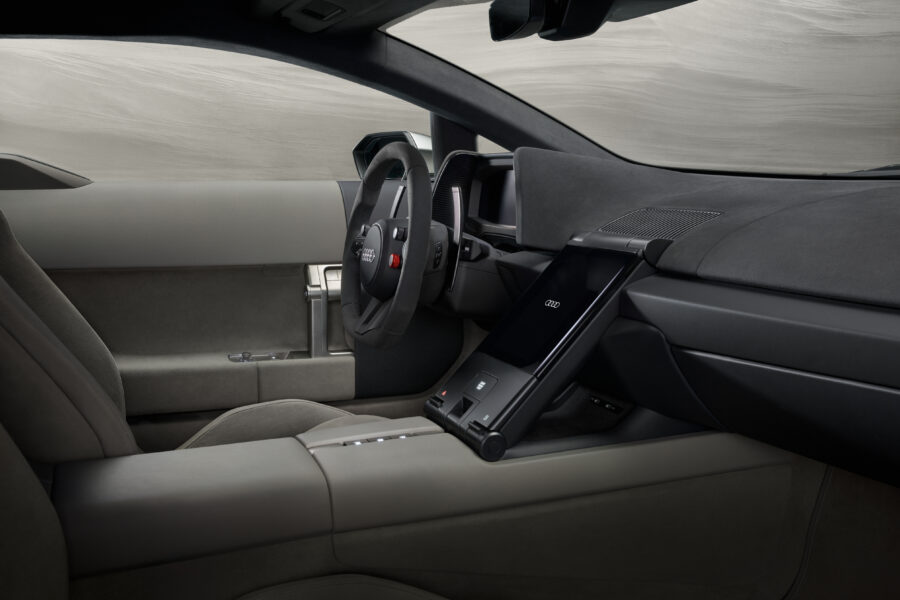
Audi has kept the interior focused on driving rather than luxury gadgets.
The layout uses:
- Digital instrument display
- Aluminium trim pieces
- Physical steering wheel controls
- Lightweight performance seats
- Portrait-style infotainment screen
- Large paddle shifters
Interestingly, features such as cupholders and wireless charging have been left out to save weight and maintain a cleaner cabin layout. The front section of the cabin uses darker colours, while the rear area receives a lighter finish called Shadow Dune.
Premium materials, brushed metal surfaces and a driver-oriented dashboard layout further strengthen the performance-focused character of the cabin.
New Design Direction For Audi
The Nuvolari is also the first production model to showcase Audi’s upcoming design language under design chief Massimo Frascella.
The car wears a new Titanium paint finish, which is also used on Audi’s Formula 1 programme and recent concept vehicles.
Details such as flush-mounted Audi rings, machined aluminium trim and clean body surfaces preview styling elements expected on future Audi models.
The Nuvolari is not just a limited-run halo car for Audi. It also previews technologies, design themes and engineering solutions that could influence future performance models from the brand.