
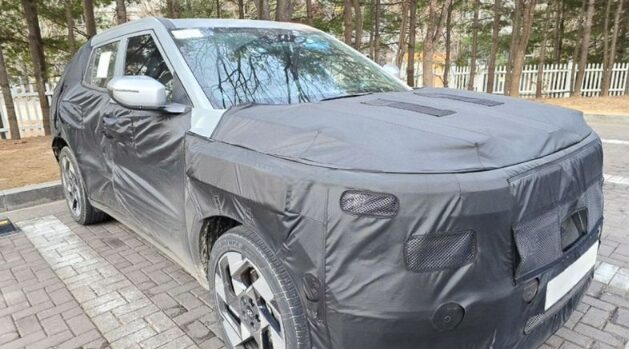
Hyundai’s next-generation Creta has been spotted once again during testing, and this time the spy images reveal more than before. The SUV is still covered in camouflage, however, enough details are now visible to clearly show that Hyundai is preparing a major upgrade, not a mild refresh. This is the third generation creta, and it looks ready to move a step higher in size, comfort and road presence.
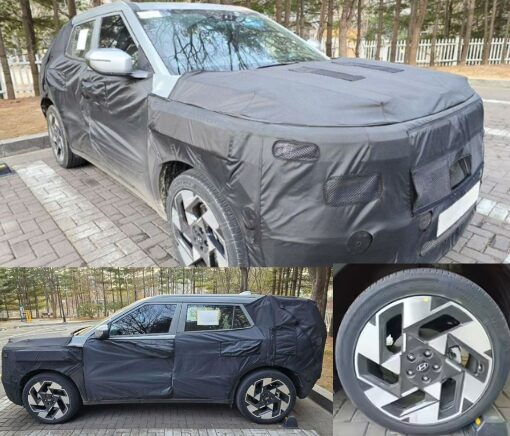
One of the first things that catches the eye in the latest spy shots is the new wheel setup. The test car is running on large 19 inch dual tone alloy wheels with 235 section tyres. This is a clear leap from the current Creta, which tops out at 18-inch wheels. The larger wheels imply a wider stance and more planted appearance, and they also imply a slightly wider track. Visually, the SUV appears bulkier and taller than the current model, which helps it stand out from the smaller compact SUVs.
From what can be seen under the camouflage, the 2027 Creta appears to be marginally longer as well. This should help improve cabin space and boot usability, areas where buyers in this segment pay close attention.
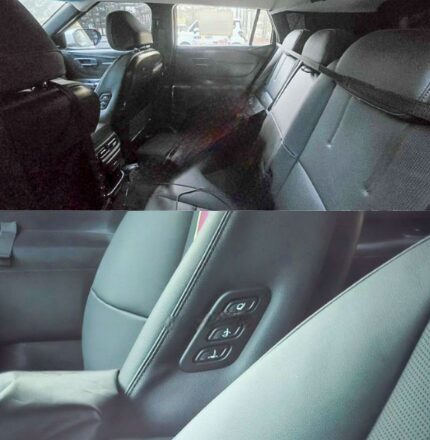
Inside the cabin the biggest highlight is the new rear seat comfort feature. The front passenger seat is electrically adjustable and and the controls can be accessed by rear occupants. This enables rear seat passengers to move or recline the front seat in order to create more legroom. This boss mode style feature is typically found in more expensive vehicles and shows Hyundai’s attention to rear seat comfort.
Other interior details that can be seen in the spy shots include
- Black leatherette seat upholstery, probably for higher variants
- Adjustable headrests for all 3 rear passengers
- Rear AC vents retained
- Improved door trim and cleaner cabin surfaces
The cabin layout looks more premium and more horizontal in design, similar to Hyundai’s newer global models.
While the dashboard is still hidden, expectations are clear based on Hyundai’s recent launches. The new Creta is likely to offer
- Increased size infotainment and digital driver displays
- An upgraded ADAS package
- Improved connected car functionality
- Better quality materials across touch points
Mechanically, Hyundai is expected to carry on with familiar 1.5 litre petrol, turbo petrol and diesel engines in the initial phase. Manual and automatic gearbox options should remain. A powerful hybrid variant is widely anticipated in the future, as per Hyundai’s India strategy.
The next-generation Creta is internally known as SX3, and is expected to sit on a new platform, which allows for larger dimensions and better packaging.
With testing now showing features inside as well, the launch may be sooner than expected. While 2027 is still the official timeline, a late 2026 debut is very much possible now.