
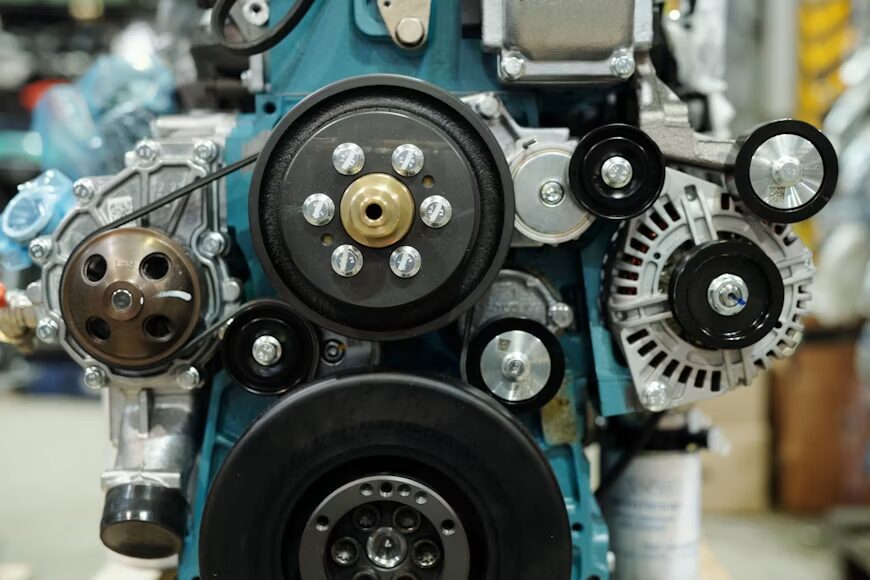
A Dual Mass Flywheel Is Used For
Dual mass flywheel fits between engine and gearbox unit and its purpose is to remove the torsional vibrations caused by the pulses of combustion from the engine. It is made from two masses that are linked by a set of springs and dampeners. The main mass bolted to the crankshaft and the secondary mass bolted to the clutch. The dual mass flywheel absorbs vibrations before they hit the gearbox, which helps to quiet the engine and extend the life of its transmission parts, and improves the overall driving experience.
Why Dual Mass Flywheels Don’t Work
Over the passage of time, the springs and dampening material in the flywheel deteriorates. Driving aggressively and in stop-start traffic, as well as towing heavy loads, increases wear. Flywheels are especially challenged by the higher compression ratios of diesel engines that generate higher stresses in the form of flywheel torsional pulses. As the tension of the internal springs gets lost or the dampening grease drains out, the flywheel is no longer properly able to dampen vibration. When the two masses completely part ways, it is a significant and costly failure.
Recognising the Symptoms
The classic symptom of worn dual mass flywheel is a rattling and/or chattering sound when idling that clears when you press the clutch. The sound is generated when the two masses collide against each other with insufficient spring tension between them. Other symptoms include vibrations felt in the clutch pedal, juddering when accelerating from a standstill and failure to shift easily into gear. If any combination of these are observed, the flywheel should be inspected before causing secondary damage to the clutch or gearbox input shaft.
Inspection and Diagnosis
The free play between the two masses is used to determine if the flywheel is in good condition. Most manufacturers will specify a maximum rotational play, after which it is recommended to replace the component. A visual inspection of the bellhousing done through the inspection hole will show cracking, heat discolouration or missing dampener material. In some workshops, there are specialized tools that will measure the flywheel’s resistance to turning which will be a more accurate measurement.

Replacement Considerations
In fact, when replacing a flywheel, the clutch will always be replaced at the same time, as getting to the flywheel involves removing the gearbox and clutch assembly. To put everything together again with an old clutch is senseless, and to do the same work again six months later is a waste of work. That is why most mechanics will strongly suggest that you have a complete clutch and flywheel kit.
Solid Flywheel Conversion
Some owners opt to use a single mass flywheel and an upgraded single mass flywheel clutch plate. This is a cheaper option in the long run since solid flywheels are not prone to failure in the same manner. The drawback is that the drivetrain is noisier and vibrates more, especially at low rpm. Not every car is available for solid conversion and some purists say that converting the car alters its character.
Conclusion
Dual mass flywheel is a wear item that will only last for a specific number of miles, usually ranging from 80,000 to 150,000, depending on driving conditions. Be aware of the early signs of wear and tear, prepare for clutch replacement with the funds, and consider the benefits and drawbacks of a solid conversion when durability is more important than refinement.